Two AI Events, Two Very Different Go-to-Market Strategies
Last week I went to two very different AI media events in San Francisco.
On September 8, I joined the final night of Luma AI and TIAT's Creative Intelligent Machines Continuum maker series. Two days later, I attended a private executive dinner hosted by LTX and Synergy.
One event put creators in a room with laptops, prompts, and Luma's agentic creative system. The other brought together people who could potentially build with LTX's open-weights model and gave them a very good dinner.
The formats were completely different because the products ask people to make different kinds of decisions. Luma asks a creator to learn a new way of making. LTX asks an organization to reconsider who controls the model and infrastructure underneath its workflow.
Both events were working on the same go-to-market challenge: How do you design an experience around the change your product is asking people to make?
Luma: Help people experience what is possible
The entire Luma experience was about creation with its agentic system.
My biggest takeaway from that night was simple: Luma has built a really good agent.
We saw what Luma's Forward Deployed Creative team had made with the agent, and then we started talking about what we could build ourselves. Different teams went in different directions. Each group had its own idea of what it wanted to make and how it might use Luma's tools and workspace to bring that idea to life.
The atmosphere was built around experimentation. People were encouraged to think outside the box, try things, and see what happened.
That approach makes a lot of sense for AI media because these tools put people into a very different workflow and brain space from traditional production.
A traditional media process usually unfolds across many stages. Different people make different decisions at each point. A concept moves through writing, directing, production, editing, visual effects, sound, color, and delivery. Each person builds expertise in a particular part of that chain.
AI media compacts many of those stages. It gives someone the power to make decisions in areas where they may never have worked before. A person who is used to writing may suddenly be making choices about camera movement, lighting, performance, editing, sound, and visual style, sometimes in the same interaction.
That is an enormous amount of power. Directing that power is still difficult.
People are usually willing to work through resistance they understand. They know what a hard edit feels like. They know what it means when a shoot needs another setup or when a design needs another round. Unknown resistance is different. When someone can't understand why a system produced a result, what language it expects, or what to try next, they are much more likely to disengage.
AI media contains a lot of unknown resistance. Its power alone doesn't make the workflow intuitive.
This is where Luma's event format becomes smart go-to-market work. The company put people in a room where they could see what was possible, try the system themselves, watch how other teams approached it, and get help when they hit resistance.
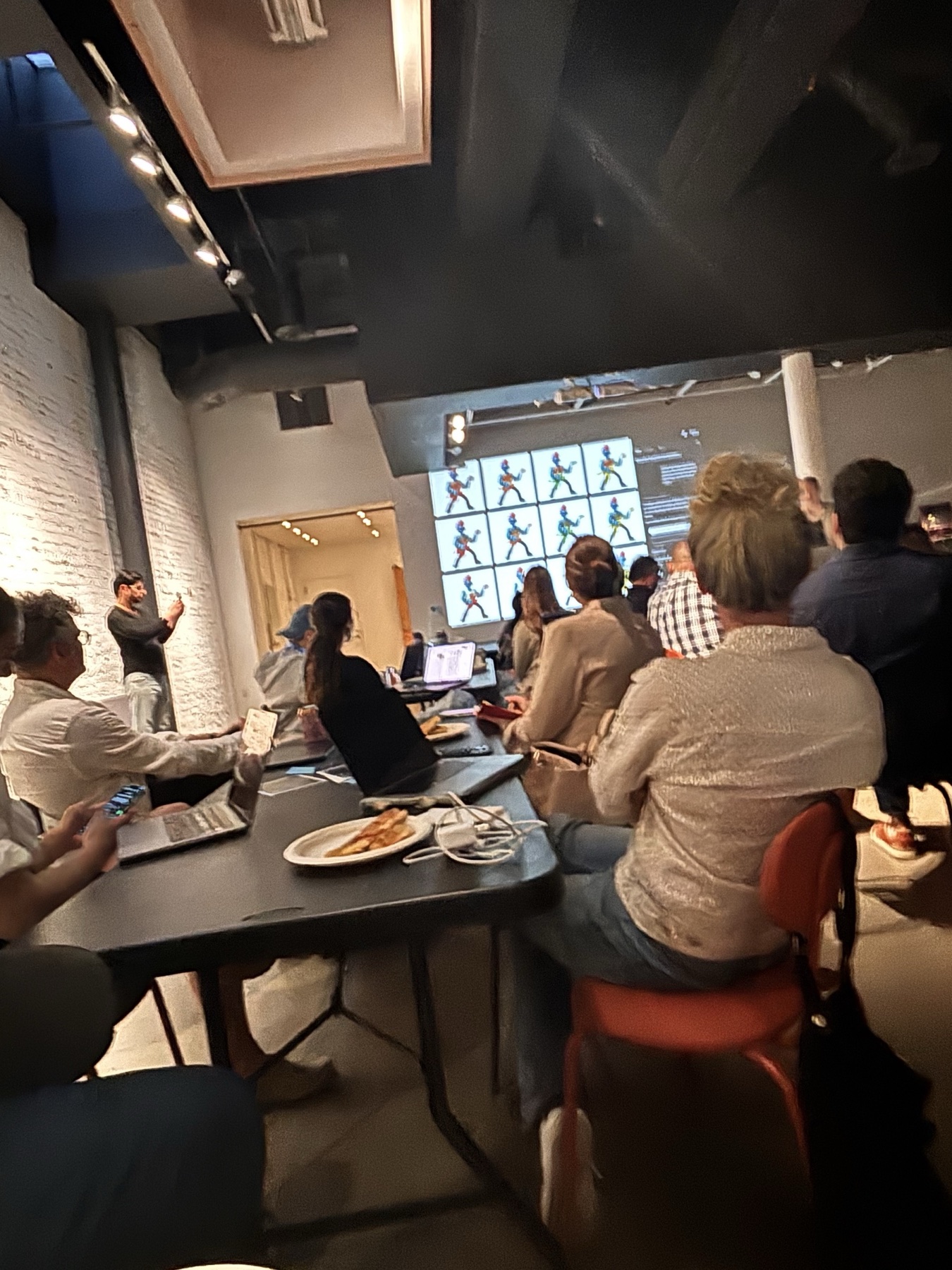
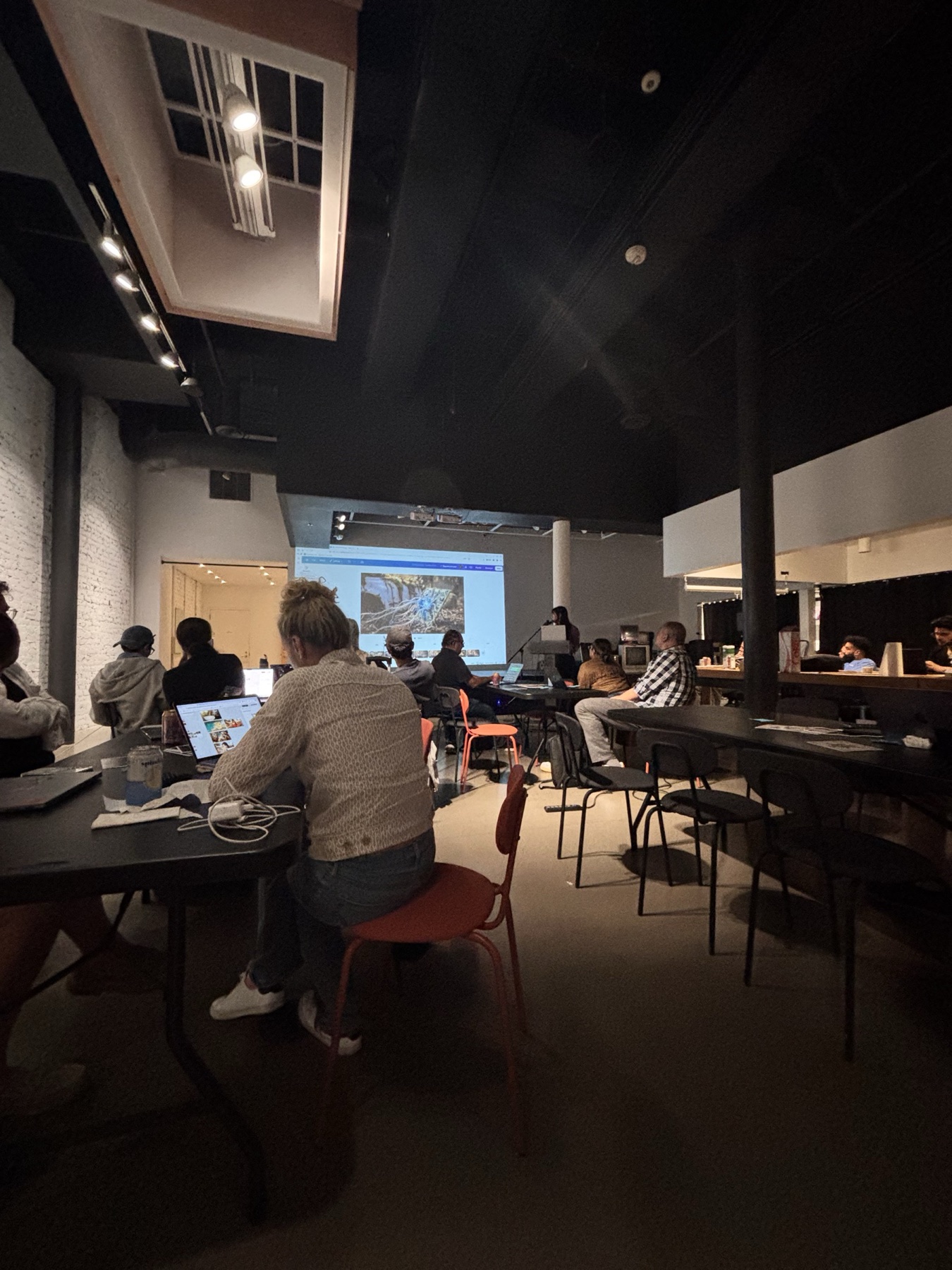
Seeing what is possible helps potential customers understand the product. It also helps Luma understand the product. When many kinds of creative people are given the same system and the freedom to experiment, they will find uses, problems, and workflows that the company may not have predicted.
The event works as product education, customer discovery, community building, and creative research at the same time.
LTX: Make the case for owning the workflow
The LTX dinner was a completely different game because LTX is selling a different kind of change.
LTX has a strong open-weights video model, and LTX-2.5 was the new release in the room. A team can download the model, run it on its own infrastructure, fine-tune it, and build on top of it.
The sales argument is ownership. With many closed AI services, a company may build an important workflow while still depending on someone else's model, infrastructure, access, and pricing. An open-weights model gives the company control over a critical part of that process.
The question at this level is not simply, “Do I need to learn another tool?” It is, “Do we need to change this process as a whole?”
That is a larger organizational decision. It involves creative workflows, technical infrastructure, intellectual property, cost, governance, and the people responsible for all of them. The company gathered people who could potentially use, adapt, or build with the model, along with people who could influence that larger process change.
This was probably the smartest company dinner I have attended so far.
A lot of technology events bring people together and then PowerPoint them to death. Someone gets onstage and spends most of the evening pushing information at a room full of people who slowly stop absorbing it.
LTX ran a three-hour event and spent only about 15 minutes talking about the product.
The first hour gave people time to arrive, have a drink, speak with one another, and meet members of the LTX team. Then the company gave a concise presentation. It explained the model, the open-weights strategy, and why that strategy mattered. After that, we ate dinner and talked.
At first, limiting the product presentation to 15 minutes might sound counterintuitive. To me, it showed that LTX had thought deeply about both its product and the decision it was asking people to consider.
The central value of a product should fit into a few clear sentences. The rest of a presentation should support those sentences. When a company needs an hour to explain the basic reason its product matters, the product or the story probably needs more work.
LTX could make its case clearly and then give people room to think through what adopting that model could mean for their organizations.
That matters because people have a hard time retaining large blocks of information. We may live in a world of enormous AI context windows, but human beings still want ideas they can absorb, remember, and repeat.
The rest of the night gave people time to connect, talk about AI, trade perspectives, and enjoy a great dinner. That unstructured time mattered because a process-level decision needs conversation. People need to compare priorities, ask questions, and understand how other organizations are approaching the same shift.
The experience also created a very positive feeling around LTX without forcing the product into every conversation.
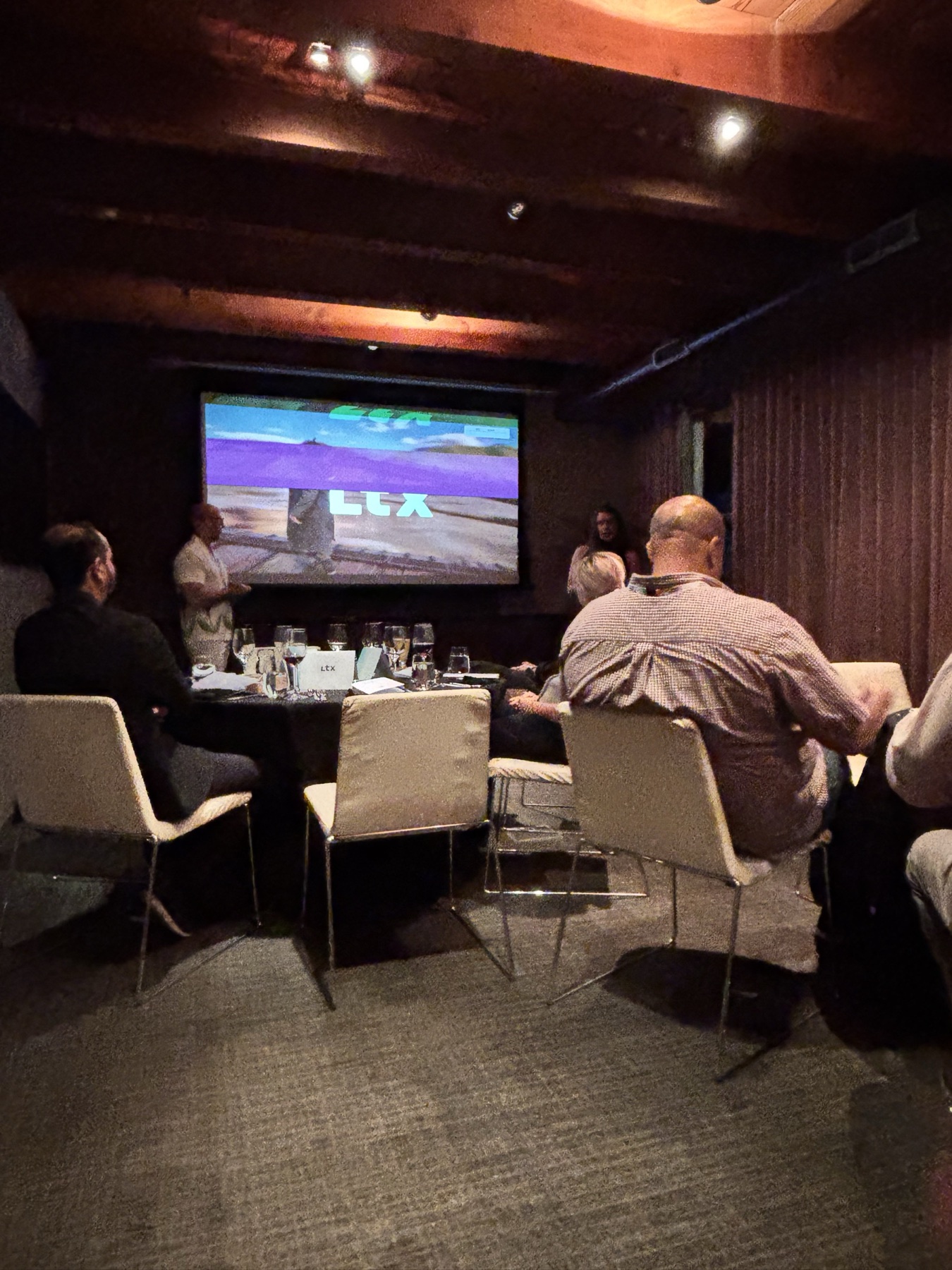
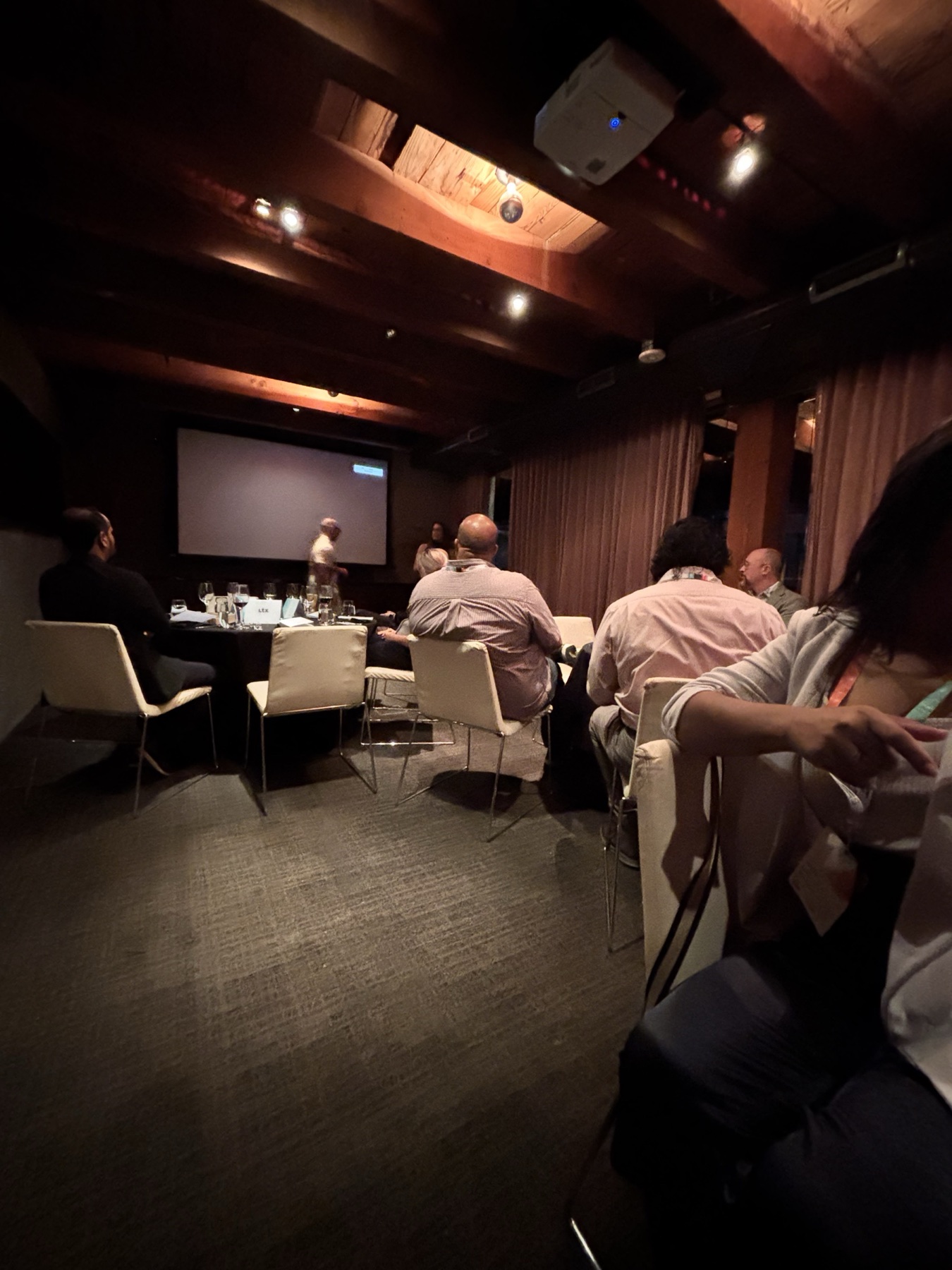
That creates a natural opening for what comes next. LTX can follow up with people about projects, technical questions, and ways to engage with the open-weights model. The relationship has already started from a place of clarity and generosity.
The event has to fit the product
Luma and LTX chose different event formats because their products create different paths to adoption.
Luma's product becomes useful when a creator spends time with it, learns how to direct it, and discovers what it can add to the creative process. The event therefore needed to be a working session. People had to use the system, hit resistance, get help, and keep going.
LTX's open-weights model asks a company to consider changing the foundation beneath a workflow. That decision requires a clear strategic case, access to the team, and enough unstructured time for people to discuss the implications. The event therefore needed to feel closer to an executive working dinner than a product workshop.
Both events were designed around the actual product and the relationship that product needed to build with its market.
That may be the most useful go-to-market lesson from these two events. Outreach works when the experience reflects the change the product is asking people to make.
For a creative tool, that barrier may be an unfamiliar workflow. Give people a place to experiment and enough support to get through the first moment of unknown resistance.
For an open model, the barrier may be uncertainty about replacing a process and taking responsibility for the infrastructure beneath it. Explain the strategic case clearly, make the people behind it accessible, and create room for the questions that matter.
The strongest AI media companies will pair good technology with a real understanding of how people encounter it. They will help customers see what is possible, absorb the idea, and imagine a next step that feels natural.
Luma and LTX took very different paths to that outcome. Both gave me a better understanding of where AI media go-to-market is heading.
I am excited to see what people build from here.
← All posts