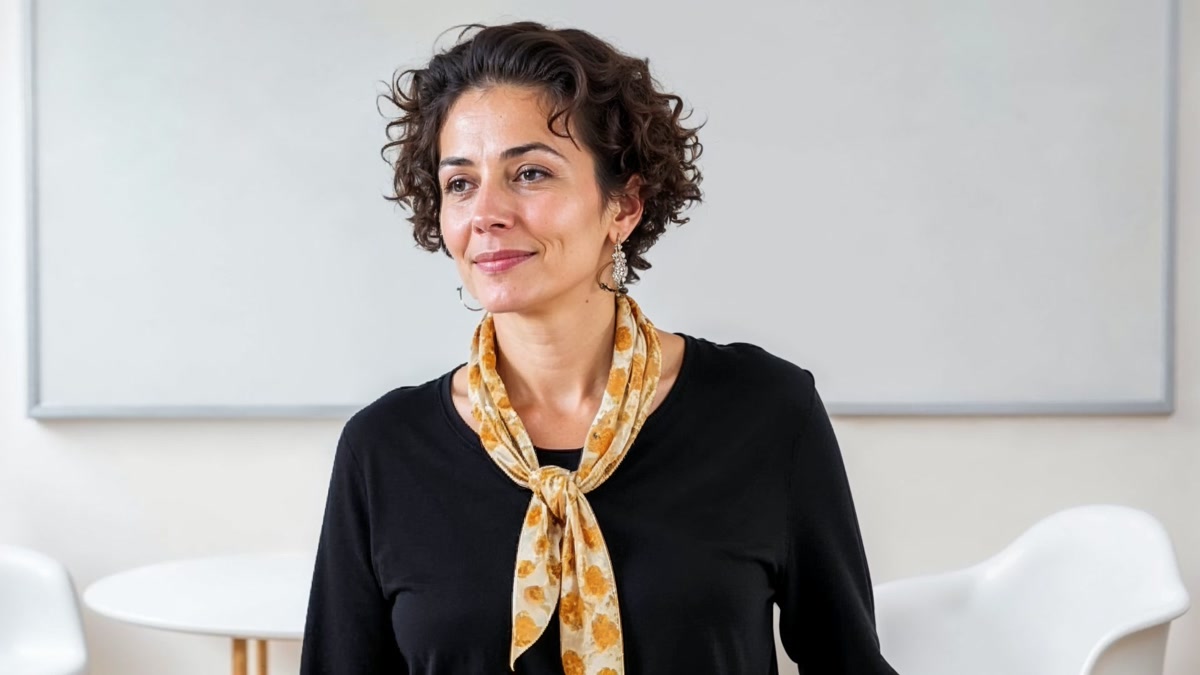
AI-generated Personas produced for Microsoft. Fully synthetic characters, no real actors.
The Brief
Microsoft's product design teams needed photorealistic AI-generated characters for internal product storytelling.
No traditional production crew. No talent casting. No live-action budget. The ask: build 9 fully AI-generated
"Personas" that look, move, and speak realistically enough for enterprise use, then write the playbook so
Microsoft's teams could keep producing AI media on their own.
The Challenge
No playbook existed for this, anywhere. Not at Microsoft, not in the industry. We had to deliver
production-quality assets to a premier client while simultaneously inventing the production process itself,
in an environment where the tools, platforms, and best practices were changing week to week.
What We Built
Each of the 9 AI Personas was a fully realized digital character: consistent appearance across shots,
multiple wardrobe options (enterprise, small business, consumer), and a library of video assets covering
greetings, listening reactions, speaking, thinking, and over-the-shoulder angles. These were not static images.
They were motion assets designed to simulate real meeting participants inside Microsoft's product experiences.
Same Persona, same environment, two different emotional states. Character consistency was the core technical challenge.
The shot list per Persona included scene entry, front-facing greeting, active listening with enthusiasm (loopable),
thoughtful listening with natural eye movement, speaking with lip sync, reactions (agreement, surprise, laughter,
applause), and profile and over-the-shoulder angles. Each shot type had to maintain character consistency across
every angle and platform.
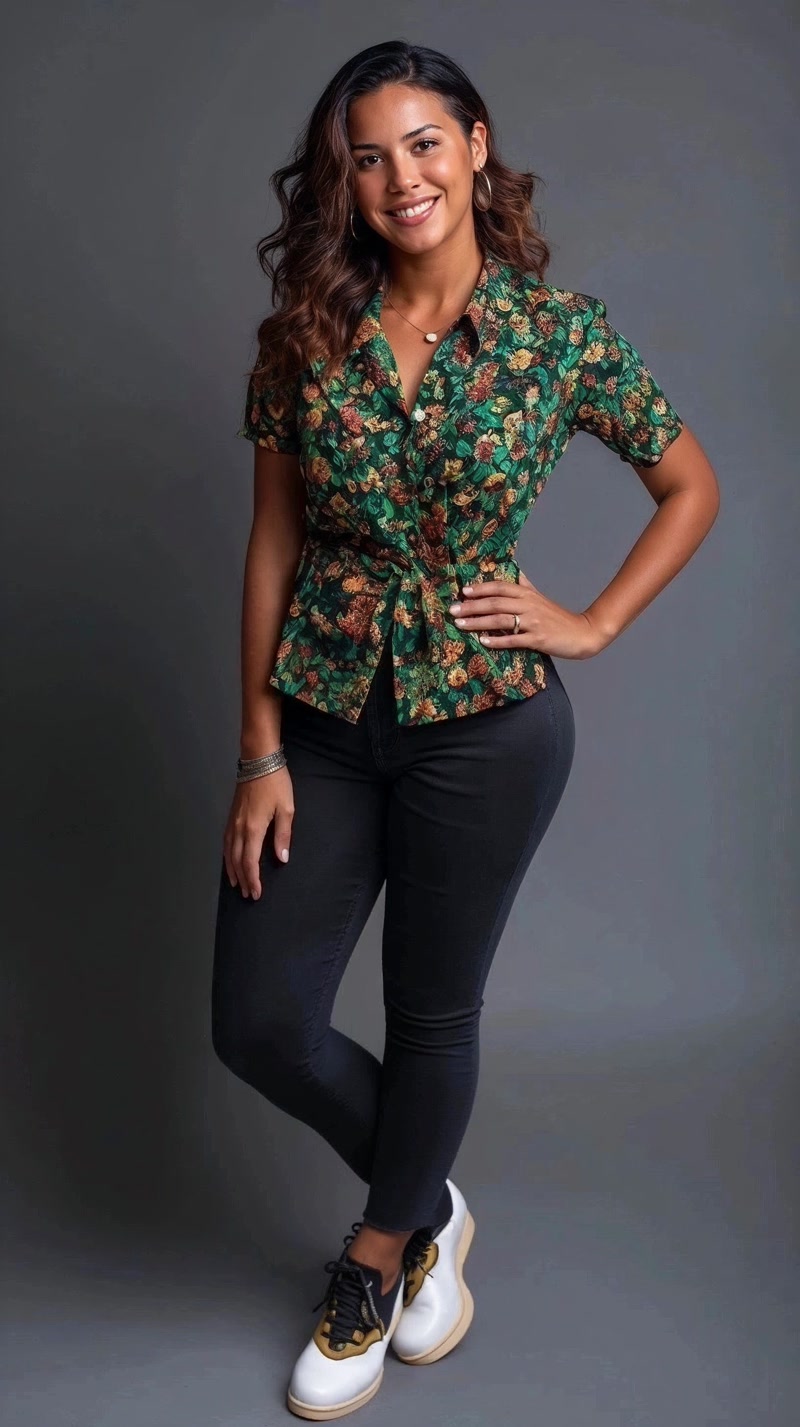
Full-body character generation via Midjourney and Magnific AI upscaling.
The Production Pipeline
We built a multi-platform AI production pipeline from scratch, integrating over a dozen tools into a coherent workflow:
Character Generation
Midjourney for concepts. Custom LoRA models trained in Krea (Flux) for consistency. 25-50 training images per Persona through Magnific upscaling.
Image Refinement
Magnific AI for upscaling. Photoshop for inpainting and skin correction. Google Gemini for clothing swaps. Krea RealTime for LoRA-driven iteration.
Video Generation
Kling AI (1.6, 2.1) for reactions. HeyGen for lip sync. Runway (Gen 2, Gen 4) for motion capture and Act One performance. Luma for specific use cases.
Upscaling & Post
Topaz Video AI and Gigapixel for upscaling. Adobe Premiere and After Effects for editorial, color, grain, and polish. CapCut for assembly.
Voice & Audio
ElevenLabs for AI voice generation. Runway Act One for syncing facial performance to audio.
Collaboration
Frame.io for client review. Microsoft SharePoint and OneDrive for asset management. Figma for visual reference and casting boards.
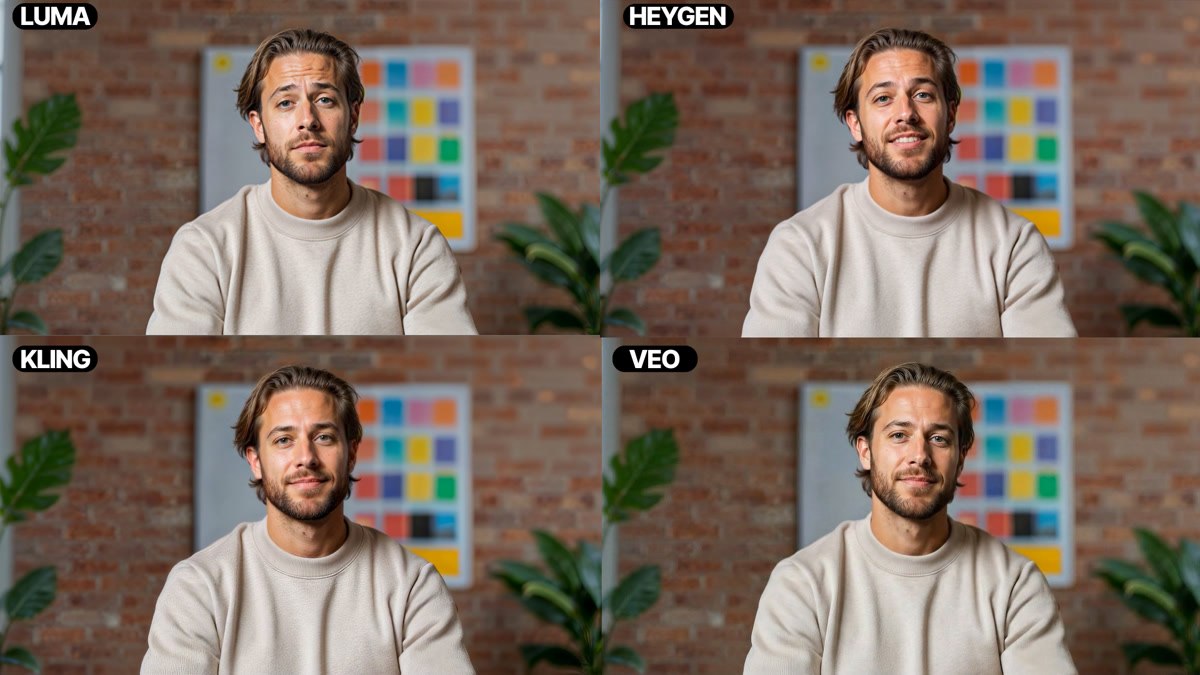
Same character rendered across four AI video platforms: Luma, HeyGen, Kling, and Veo. Evaluating platform strengths was critical to the pipeline.
What Made This Hard
Character Consistency
The same Persona had to look like the same person across front-facing shots, profile views, over-the-shoulder angles, and different wardrobe setups. Every platform introduced its own visual biases. LoRA models required careful weight balancing to maintain likeness while allowing pose variation.
Tools Changing Mid-Project
Kling released version 2.0 (which downgraded resolution), then 2.1 (which restored it). Midjourney released V7. Runway updated their generation models. Each update meant re-evaluating the pipeline, testing new capabilities, and adjusting workflows, sometimes in the middle of an active delivery cycle.
The Looping Problem
Microsoft needed assets that could loop seamlessly for meeting simulations. Creating smooth, natural-looking loops from AI-generated video required matching first and last frames, managing expression transitions within 10-second generation windows, and developing modular clip structures.
Enterprise Compliance
Procurement of AI platform licenses through Microsoft's vendor system. Managing accounts across a dozen platforms with varying enterprise support. Navigating legal review for AI-generated character likeness rights.
The biggest learning from this project: in AI media production, you cannot be a master of the result. You can only be a master of the process. Traditional production works toward a fixed creative target. AI production requires a fundamentally different approach. The tools change too fast. The outputs are probabilistic, not deterministic. The team that wins is the one that builds adaptable process frameworks, manages client expectations around AI's inherent variability, and knows when to embrace what the AI generates rather than forcing it toward a predetermined result.
Key Deliverables
019 photorealistic AI Personas with multiple wardrobe and environment configurations
02Video asset library: greetings, reactions, speaking, listening, transitions across multiple angles per Persona
03Comprehensive AI media workflow documentation covering character generation, LoRA training, video production, upscaling, post-production, and voice synthesis
04Platform evaluation matrix covering Midjourney, Krea/Flux, Kling, Runway, Luma, HeyGen, Magnific, Topaz, ElevenLabs, and others
05File organization system and naming conventions for AI production asset management
06Hands-on working sessions to onboard Microsoft's design teams on the documented processes